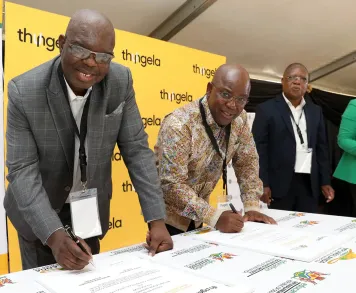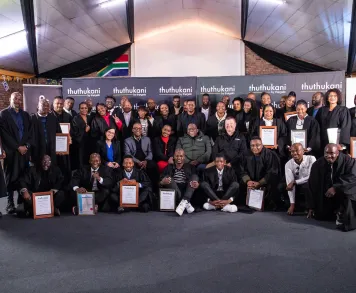




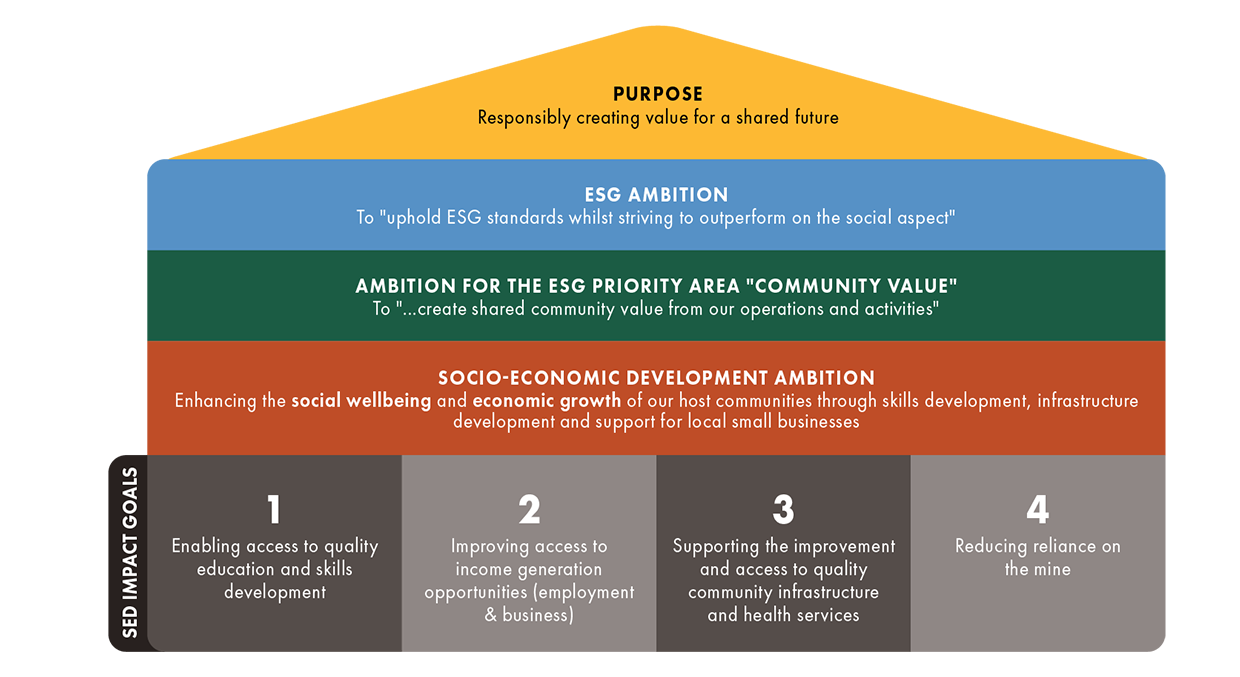
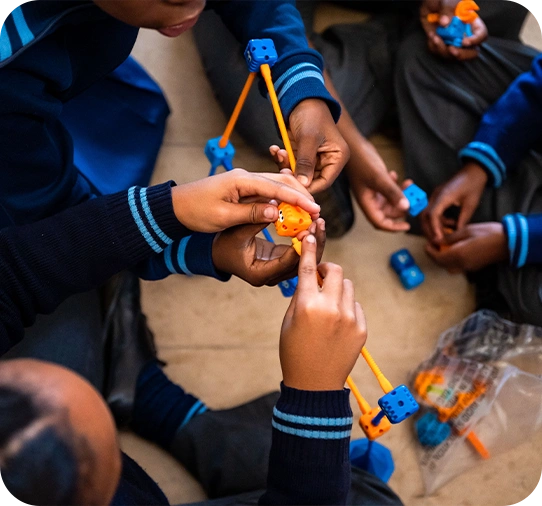
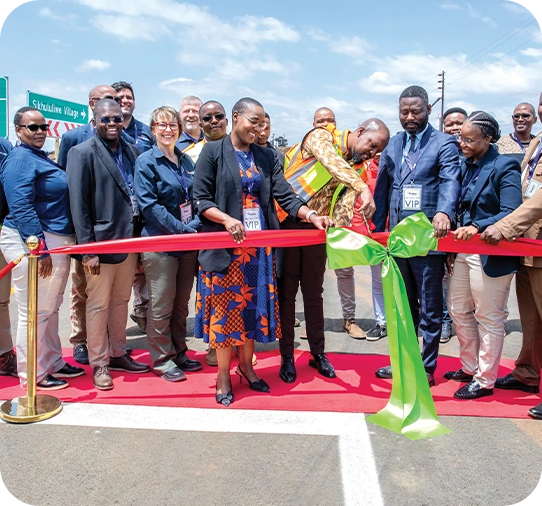
We are committed to driving long-lasting social impact through our socio-economic development (SED) initiatives while fostering resilient community partnerships and transparent engagement. We channelled R130 million into socio-economic development initiatives for host communities, guided by our socio-economic development approach. These initiatives included education support, delivered through the Thungela Education Initiative, enterprise and supplier development through Thuthukani and the execution of ten Social and Labour Plan projects in 2025 that focussed on community infrastructure projects and improved access to healthcare.


.
.

Our Social and Labour Plans summarise each operation’s plan to create value for its host community and can be found here: link to the documents attached.
We advance local entrepreneurship and skills development through our Thuthukani enterprise and supplier development programme. The programme will reduce the reliance of host communities on surrounding coal mines for their livelihoods.

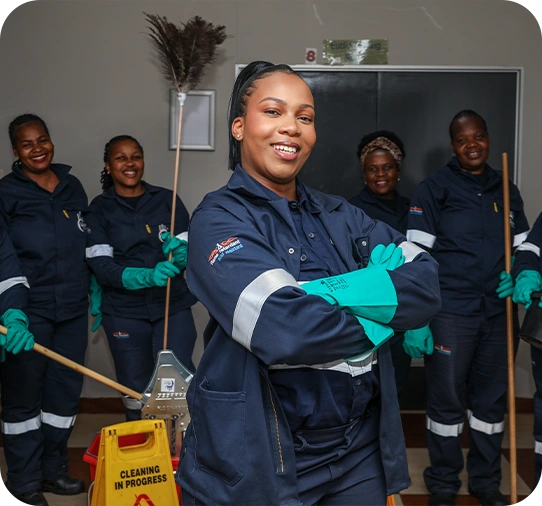
We strive to create a workplace where each individual feels valued, respected and free to be their whole, authentic selves regardless of race, ethnicity, nationality, gender, age, religion, ability, sexual orientation or identity. In 2025, historically disadvantaged persons held 69% of management roles, reflecting progress towards greater leadership representation.
Women accounted for 36% of management positions, reinforcing our focus on gender diversity and inclusive leadership throughout the organisation. We further invested in our people through focused leadership programmes, ongoing training initiatives, and the strengthening of future-focused skills.
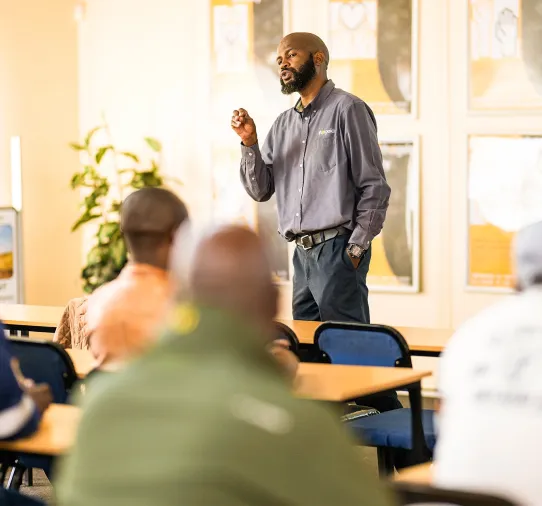
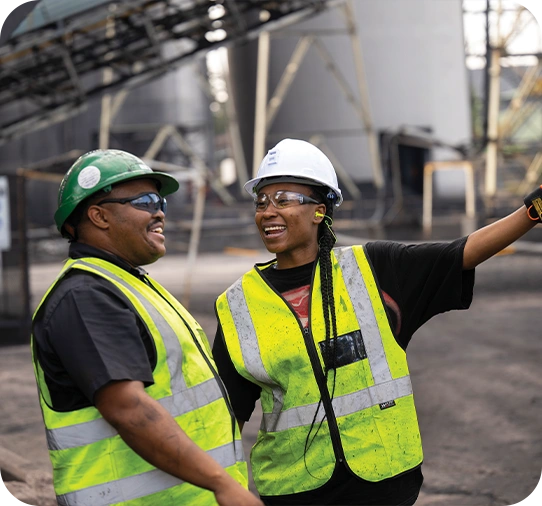
Safety is our first value, and we are unwavering in our commitment to zero harm, so that all our people return from work safe and healthy every day. 2025 marked the third consecutive year without a loss of life.
This achievement is testament to the discipline and dedication of our people. This culture continues to be strengthened through targeted interventions in identified highrisk areas. Our commitment extends beyond physical safety to holistic employee wellness, through dedicated health, wellness and employee assistance programmes.
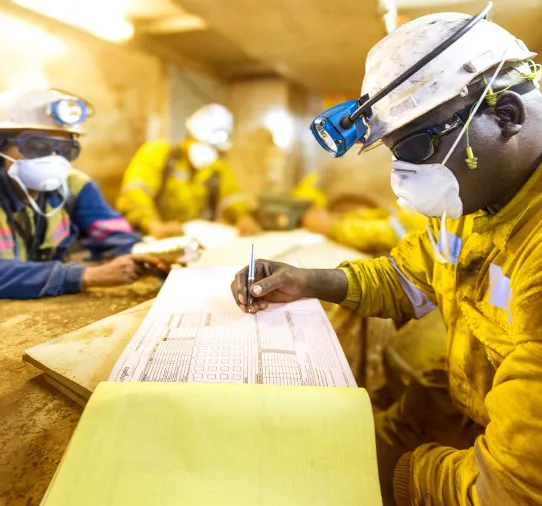
Projects that address our core challenges are managed through our mine’s Social and Labour Plans (SLPs) as well as through corporate social investment (CSI) and strategic programmes such as the Thungela Education Initiative and our enterprise and supplier development (ESD) programme, Thuthukani. Read more about our community projects.
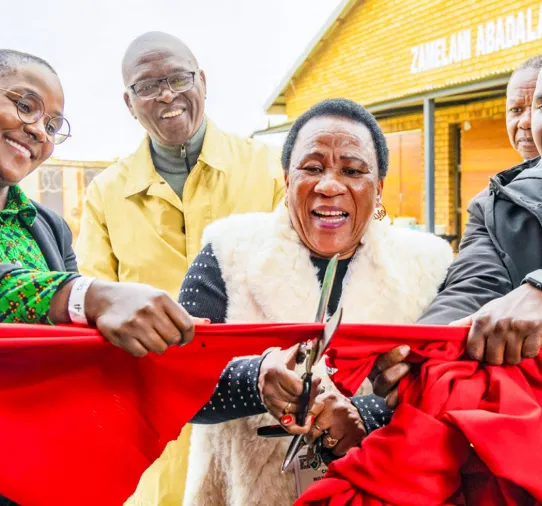
Host communities are critical stakeholders as they experience both the positive and negative impacts associated with every stage of the mining lifecycle.
Their support underpins our social licence to operate and is earned through our commitment to being a trusted social partner, by building positive relationships, and upholding our responsibility to leave a legacy that lasts beyond the life of our mines. We endeavour to ensure that our actions do not negatively impact local communities, today and post-closure.
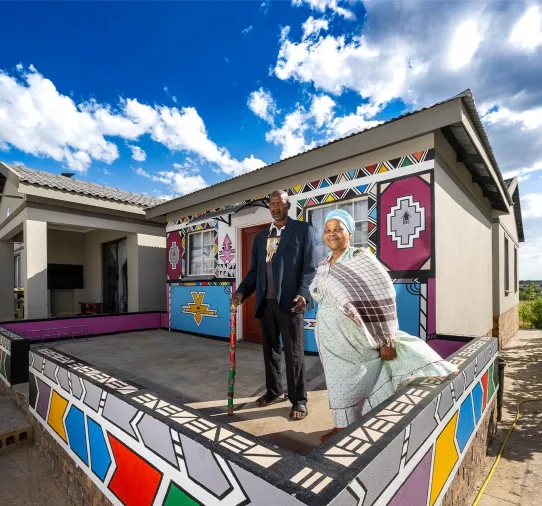
Our success depends on safe workplaces, inclusive opportunities and positive relationships with the communities surrounding our operations
The Thungela Social Policy guides our approach to managing social risks, impacts and benefits, and is rooted in international best practice standards and local legislation. Among these standards are those set by the International Finance Corporation (IFC), the International Council on Mining and Metals’ Good Practice Guide on Indigenous Peoples and Mining, the United Nations Guiding Principles on Business and Human Rights, the Voluntary Principles on Security and Human Rights and Australia’s Native Title Act.
Key elements of the policy include social governance, risk and impact management, stakeholder engagement, socio-economic development, social incidents and grievance mechanisms, social and human rights impacts, emergency preparedness and response, cultural heritage, and land acquisition and involuntary resettlement.
Effective implementation of the policy is a cornerstone of our approach. In early 2024, our sites each underwent a baseline assessment to evaluate their initial performance against the policy. This was followed by an independent social assurance process at the end of the year to track progress. Key improvement areas include clearer definitions of social risks and more effective evaluation of controls. Greater emphasis will also need to be placed on needs analysis and baseline assessments so that we can better measure programme impacts.
The governance of social policy implementation at board level has been entrusted to the social, ethics, and transformation committee, which convenes quarterly to oversee social performance. This responsibility also extends to the chief executive officer, executive committee, site general managers, and their respective leadership teams.
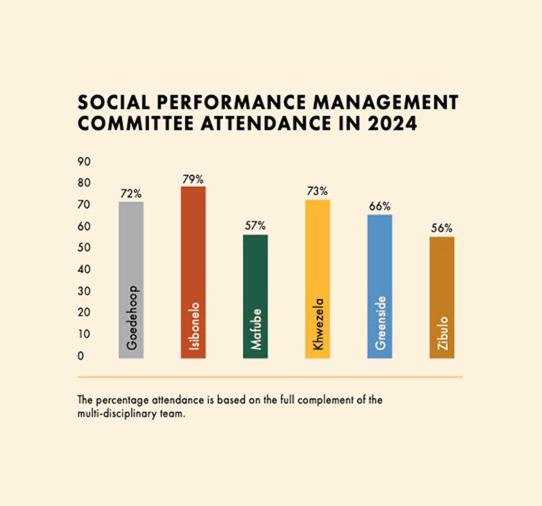
Each site has a social performance specialist operating under the guidance of a regional social performance manager. Sites establish social performance management committees (SPMC), led by general managers and attended by the mine’s head of departments and the functional heads of multiple disciplines, such as social performance, environment, safety, human resources and protection services. These committees convene monthly to monitor the progress of implementation, covering areas such as inclusive procurement, risk management, grievance resolution, Social and Labour Plan (SLP) execution, and enterprise and supplier development. On average, these meetings have an attendance rate of 67%.
We acknowledge that mining can have negative impacts on host communities and make every effort to minimise these by ensuring that our sites work to the highest operational standards.
A formal grievance mechanism is in place to ensure that community grievances and concerns are addressed in a timely manner. This mechanism – and the procedure for reporting, investigation, feedback and appeals, is communicated via various engagement channels, including community engagement forums, our community newsletter and through the employee induction process.


Grievance is made telephonically, via letter, email or by filling in the complaints register at the entrance to each site.

Grievance is captured in our electronic incident management system. This records the receipt, analysis and response to each report made.

Grievant receives an acknowledgement of receipt within 24 hours.

The complaint is sent to the relevant department for investigation.

Findings and proposed resolutions are discussed with the grievant, who either accepts that the matter is resolved or lodges an appeal.

Where an appeal is lodged, an independent mediation process is initiated.
In 2024, 75 grievances were logged on our incident management system (2023: 94). Of these, 18 related to dust and blasting and 23 to demands for employment and supplier opportunities. These resulted in 21 incidents of protest action compared to 29 in 2023. A total of 16LA level 3 to 5 incidents with social consequences occurred in 2024. Fourteen of those were classified as level 3 and two as level 4 compared to 16 level 3s in 2023. Two of the five level 3 to 5 incidents were community protests that escalated to violence — one outside our Zibulo North Shaft, where injuries were sustained by two community members, and another close to our Centralised Services precinct.
Tragically, a motorist attempting to pass through the latter demonstration discharged a firearm, which resulted in the death of a protester. In both incidents, the protests were related to subcontracting and employment opportunities. Investigations into both incidents were carried out by the South African Police Service and our internal security team. We adhere to established standards for managing protest action. Learnings gained from these incidents have been incorporated into existing management controls.
Our stakeholders are at the core of our purpose – to responsibly create value together for a shared future.
Our stakeholder engagement strategy acknowledges the critical role of stakeholders in our business, and our work is underpinned by maintaining and strengthening stakeholder relationships based on respect, trust and transparency. The long-term sustainability and success of our business hinges on stakeholder buy-in and support. Stakeholder engagement is crucial to fostering environmental care, driving economic benefits, ensuring regulatory compliance and identifying and managing current and potential risks, impacts and opportunities.
Through collaboration we are also able to enhance operational processes and performance, drive innovation, influence policy, share and learn from best practice, ensure investment security and drive improved socio-economic outcomes in communities. We conduct annual stakeholder mapping, where we evaluate stakeholders and categorise them based on their interest or influence on the business. This activity feeds into our materiality assessment, which is based on the issues that are most material to our stakeholders, as well as our ability to create value.
Interaction with community stakeholders is guided by our social policy, specific stakeholder engagement plans for each operation and a stakeholder engagement protocol. Each operation engages directly with surrounding communities through a range of platforms:
Read our ESG Report to discover the stories of the people whose lives we touch and the value we create together.